POTSDAM, NEW YORK · COMMISSIONED 2026
43 kilowatts, two ground mounts, and a National Grid export limit.
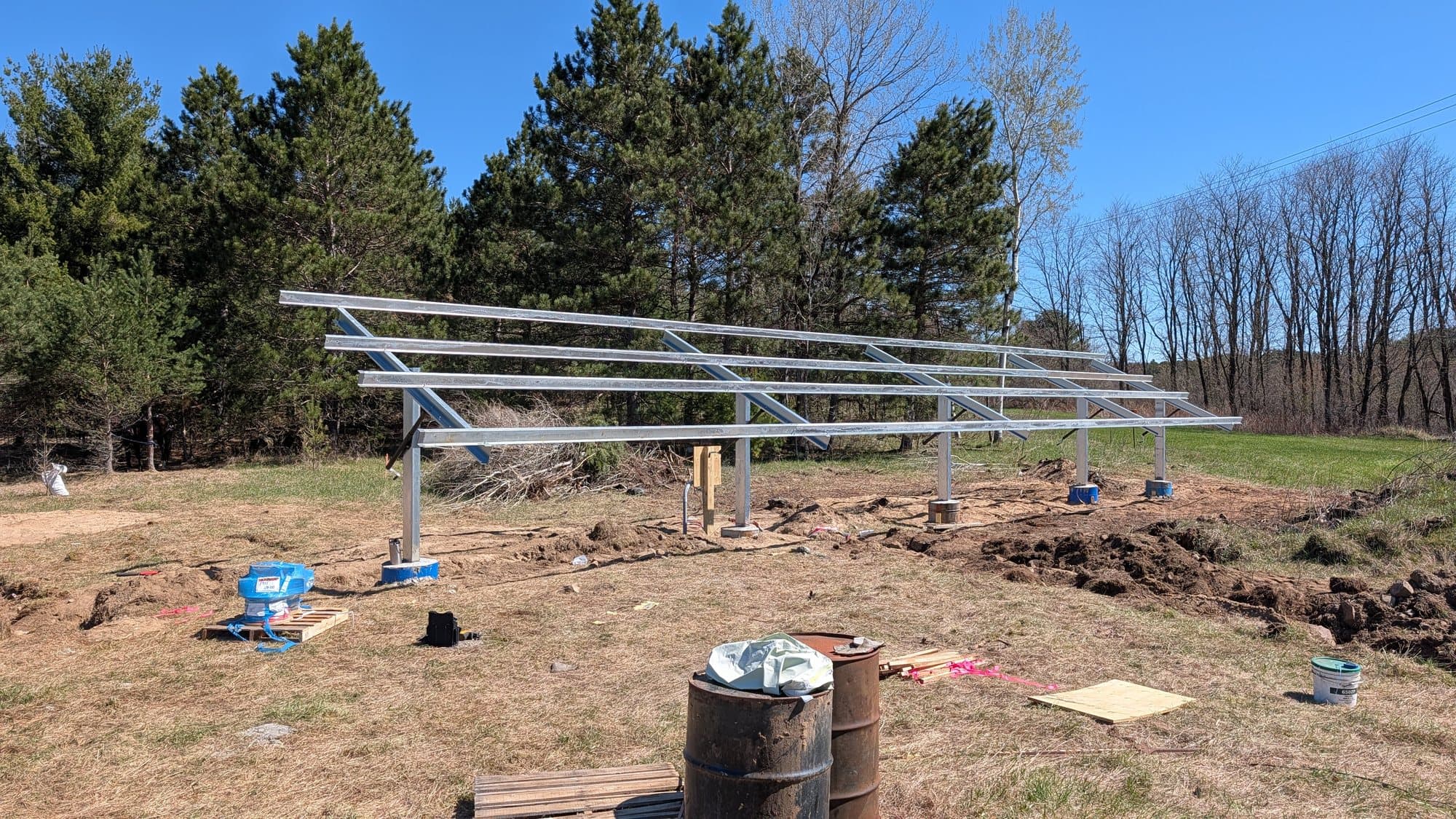
This is the largest of the arrays I have built. It powers a fragrance factory and sends its surplus to our food store in the next town over. Here is what it actually consists of.
The array
| Array size | 43.09 kW DC |
|---|---|
| Inverter nameplate | 48.0 kW AC |
| Modules | 62 bifacial, 695 W each, across two ground mounts |
| Racking | Manually adjustable tilt, reset monthly |
| Inverters | Three hybrid inverters in parallel |
| Interconnection | A microgrid interconnect device between the array and the grid |
| Utility | National Grid |
| Export limit | 24.0 kW total |
| Metering | Remote net metering, credited to another account |
Why the export limit is the interesting number
The array can make 43 kilowatts. The inverters could push 48. National Grid will accept 24. That gap is the whole design problem, and it is the part nobody tells you about when they quote you a system.
Export limiting is enforced in the inverters themselves rather than by a downstream device, and it is not something I can change casually. Once you accept the constraint, the system stops being about peak output and starts being about when the power is produced and where it goes. That is why the racking tilt gets moved by hand every month, and why the surplus is credited somewhere it will actually get used.
Remote net metering
The array sits at the fragrance farm in Potsdam. The credits go to the store in Canton. New York allows remote net metering between accounts under the right conditions, and the paperwork to make it real was more work than the trenching.
Doing it in house
Layout, racking, DC strings, rapid shutdown loop, isolators, emergency stops, inverter commissioning, parallel configuration and firmware, done in house and inspected and signed off before energisation. I am not selling solar installation and I am not looking for solar clients. I built these because I own the buildings and the arithmetic worked.
The other two arrays
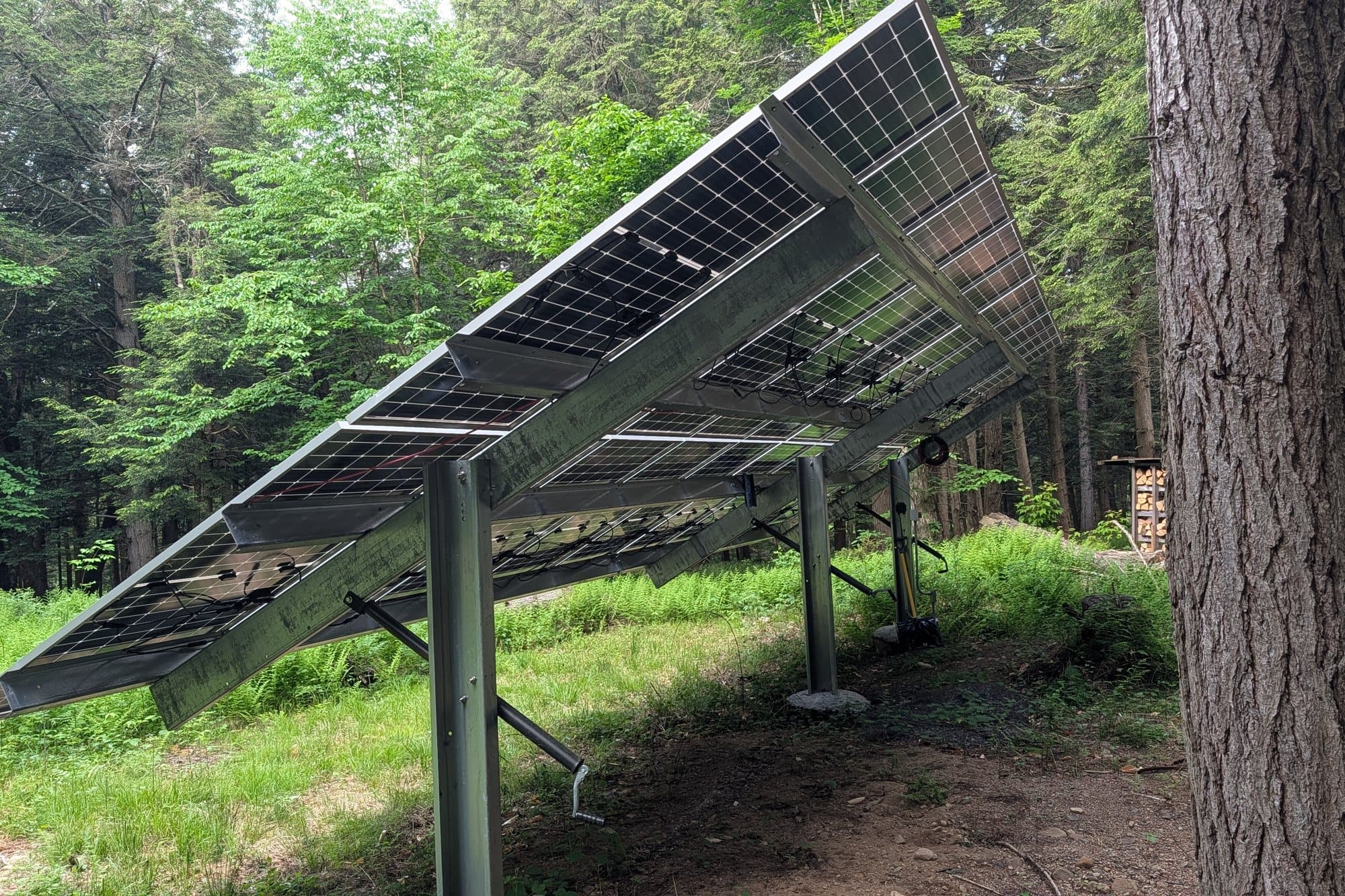
At home we live off grid on a ground mount in the woods and a battery bank. Louis Maine's Off-Grid system is the one I learned on and still help maintain. The smaller two taught me most of what made this one go smoothly.
Questions about any of this?
If you are building something similar in the North Country and want to compare notes, the form on the home page reaches me.